


Lucknow, September 26, 2026 | By Taqi Hasnain
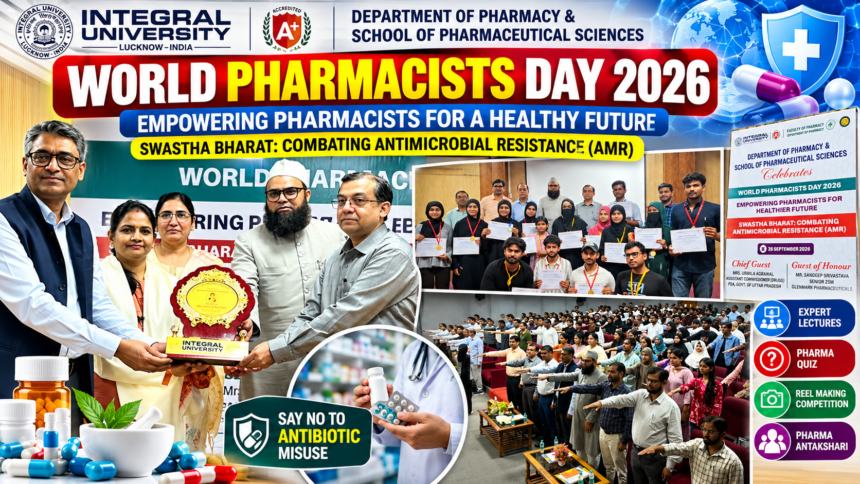
Integral University, Lucknow, observed World Pharmacists Day on September 25 with a programme focused on the expanding role of pharmacists in public health and the growing global challenge of antimicrobial resistance (AMR).
The event was organised by the Department of Pharmacy and the School of Pharmaceutical Sciences at the university’s Central Auditorium. This year’s theme was “Empowering Pharmacists for a Healthy Future,” with the sub-theme “Healthy India: Combating Antimicrobial Resistance.”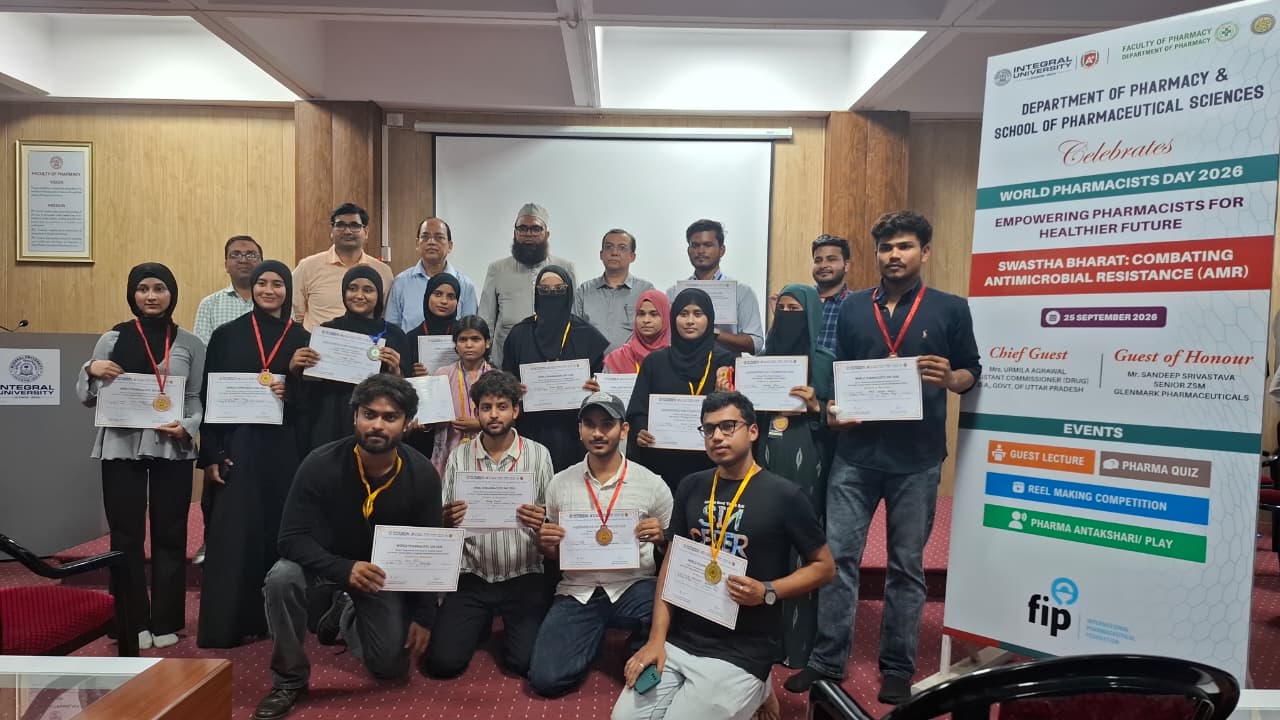
The programme brought together representatives from the pharmaceutical sector, drug regulatory authorities, faculty members and students to discuss the importance of responsible medicine use and the need for greater public awareness about antimicrobial resistance.
The event began with a welcome address by Prof. Syed Misbahul Hasan, who welcomed the guests, faculty members and participants. He highlighted the critical contribution of the pharmacy profession to a stronger and more effective healthcare system.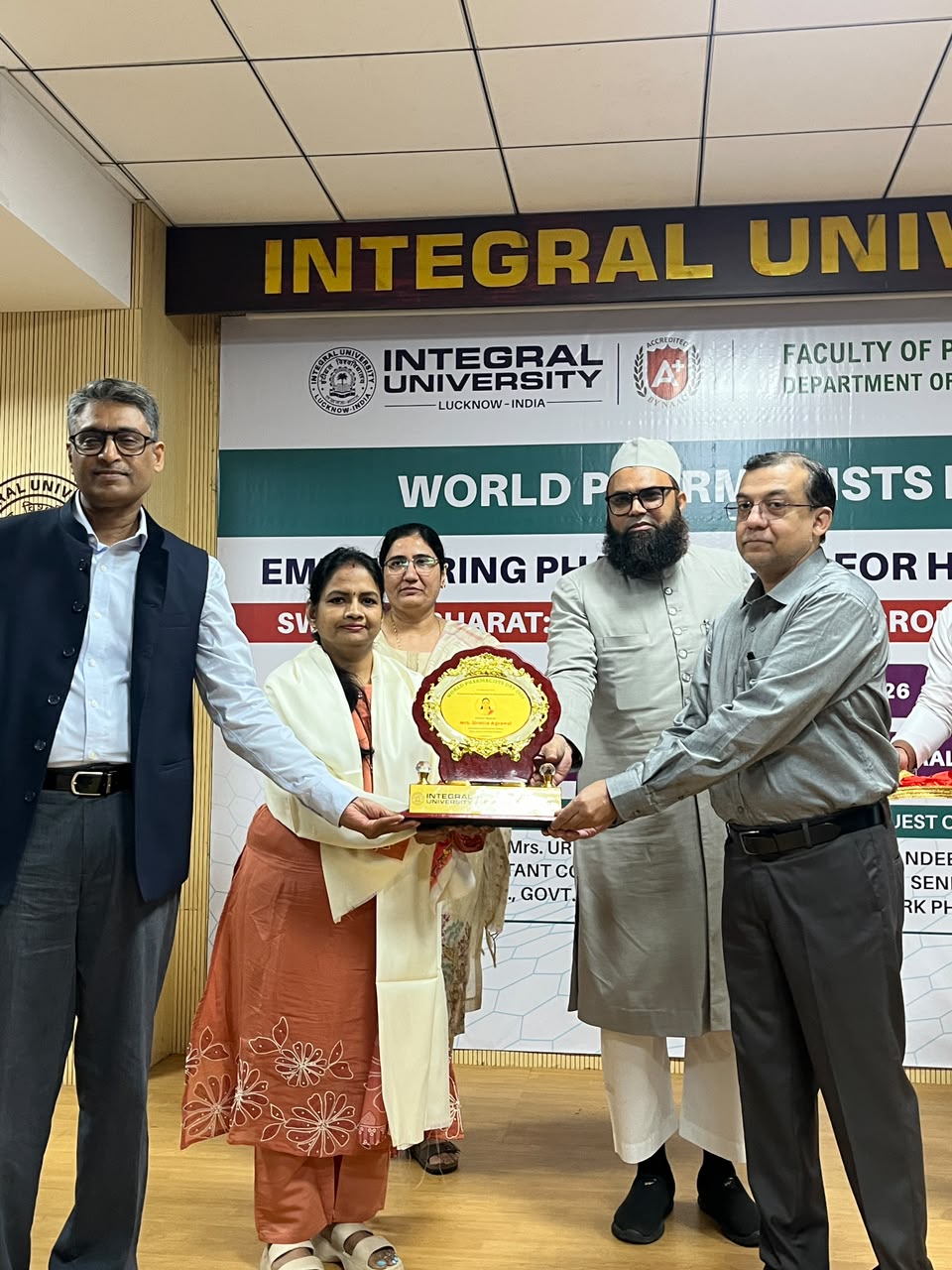
The programme featured Smt. Urmila Agrawal, Assistant Drug Commissioner (Drugs), Food and Drug Administration (FDA), Government of Uttar Pradesh, Lucknow, as the chief guest.
Addressing the gathering, Agrawal underlined the importance of ensuring that medicines are used safely, effectively and responsibly. She highlighted the role of pharmacists in protecting public health, improving awareness about antimicrobial resistance and discouraging the misuse and unnecessary consumption of antibiotics.
Antimicrobial resistance occurs when microorganisms develop the ability to withstand medicines that were previously effective against them. The growing resistance to antimicrobial medicines has emerged as a major public-health concern worldwide, making responsible use of antibiotics and other antimicrobial medicines increasingly important.
S. Srivastava of Glenmark Pharmaceuticals, who attended the programme as the guest of honour, spoke about the changing responsibilities of pharmacists within the healthcare ecosystem. He highlighted their contribution to patient care, pharmaceutical innovation and the promotion of rational medicine use.
The discussions also emphasised the importance of cooperation among healthcare professionals, regulatory authorities, pharmaceutical companies and the public in addressing antimicrobial resistance.
Speakers stressed that pharmacists can play a significant role in educating patients about the appropriate use of medicines and helping prevent unnecessary antibiotic consumption. Greater public awareness, they noted, is essential to reducing the spread of drug-resistant infections.
The programme was coordinated by Prof. (Dr.) Tariq Mahmood, Head, Department of Pharmacy, and Prof. Dr. Zubair Akhtar, Dean, Faculty of Pharmacy, Integral University.
Prof. Dr. Kuldeep Singh, Prof. Dr. Wasim A. Ansari and Dr. Irfan Aziz served as co-coordinators for the event.
The programme concluded with a renewed commitment to empowering future pharmacists with professional knowledge, ethical responsibility and a patient-centred approach to healthcare.
The observance served as a platform to underline that pharmacists are no longer limited to the traditional role of dispensing medicines. Their responsibilities increasingly extend to patient education, medicine safety, rational drug use and public-health awareness—areas that are becoming critical in the global effort to tackle antimicrobial resistance.